
Steel Grating Types: A Complete Guide to Press-Welded, Interwoven, Lock-Stitched, and Inset Connections
Steel grating, also known as steel grid or grating plate, is constructed by cross-connecting load-bearing扁钢 with横杆. It is widely used in industrial platforms, walkways, stair treads, drainage covers, and building facades.
Based on the connection method between bearing bars and cross bars, steel grating is classified into four core types: pressure-welded, interlocked, compression-locked, and inset. These four types differ in manufacturing processes, performance characteristics, and welding requirements.
Type | Connection Type | horizontal bar pattern | Weld? | Surface Features |
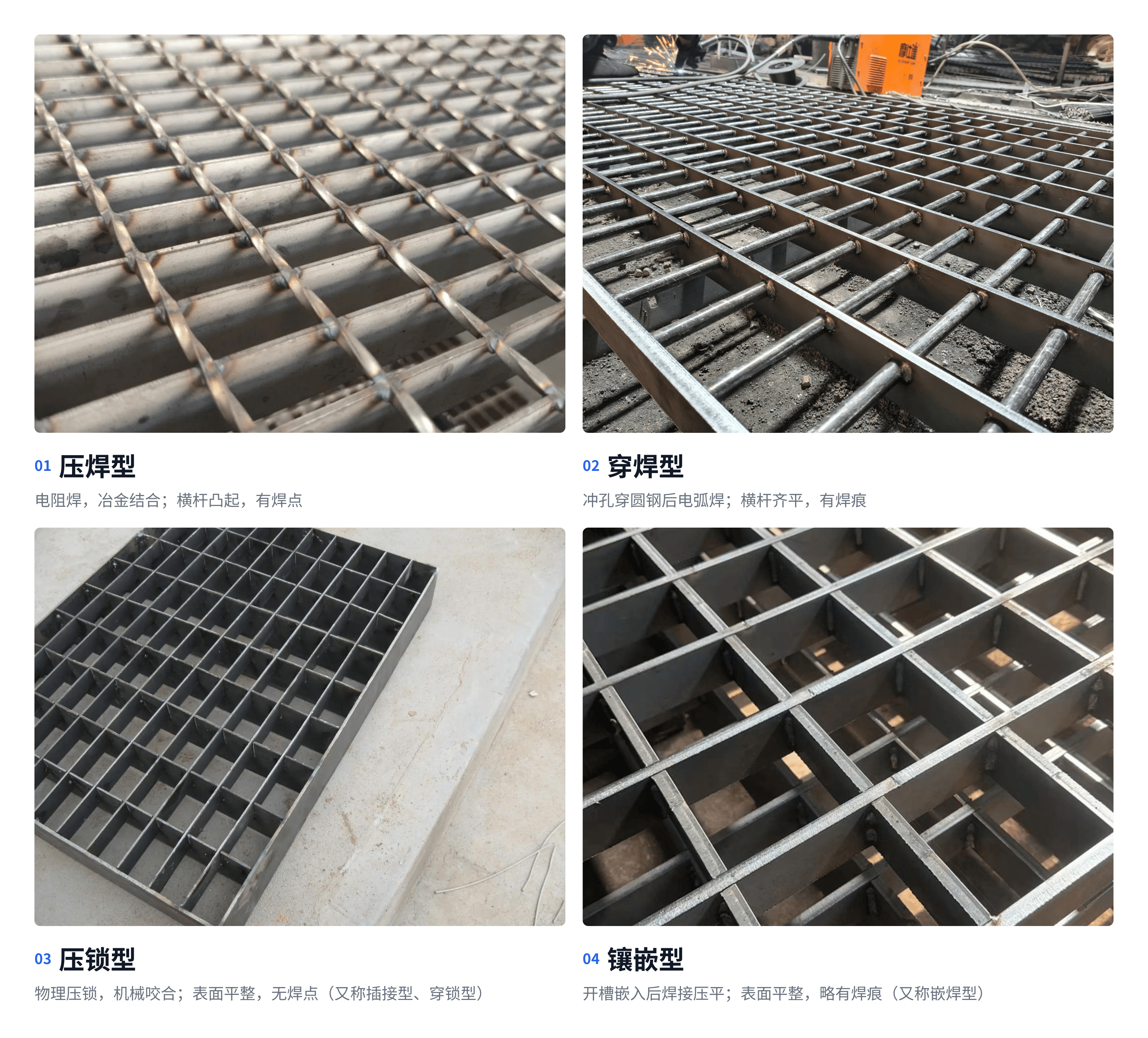
Pressure Welded | Resistance welding, metallurgical bonding | Twisted Square/Round Steel | Yes | Bar has raised sections and weld points. |
Through-weld type | Arc welding after punching and inserting round steel | Round steel | Yes | Flush surface with weld marks |
Locking | Physical compression lock, mechanical interlock | flat bar | No | Ultra-flat with no welds |
Inlay | Weld and flatten after grooving and embedding | Flat bar/strip | Yes | Smooth surface with minor weld marks. |
* Press-fit type is also called through-lock or plug-in type; Inset type is also called inlaid weld type.
Press-fit
High-voltage resistance welding fuses cross bars directly onto flat bar surfaces. High production efficiency makes it ideal for mass manufacturing; as the market standard, it is widely used in industrial platforms, walkways, and trench covers.
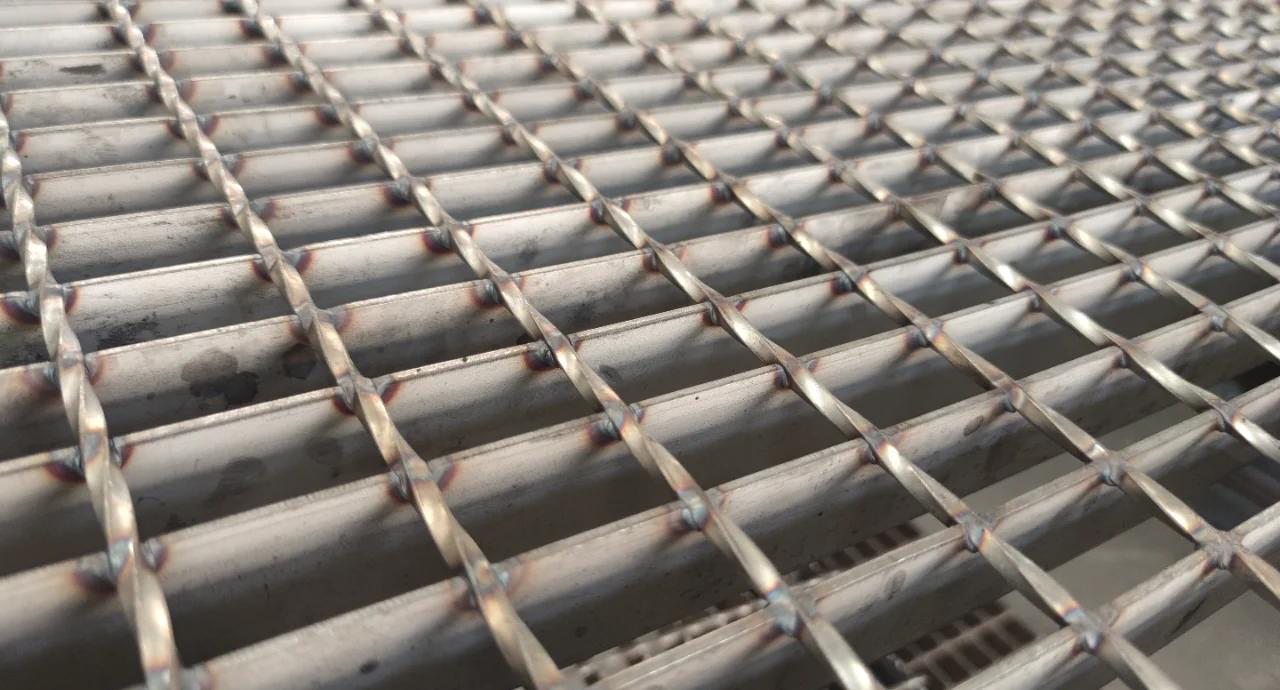
Through-holeFlat bars are pre-punched, and round bars are inserted and then welded point-by-point using arc welding. Welds are full and robust, providing high shear strength. This method is commonly used in heavy-duty industrial platforms, high-vibration environments, and scenarios requiring high safety standards.
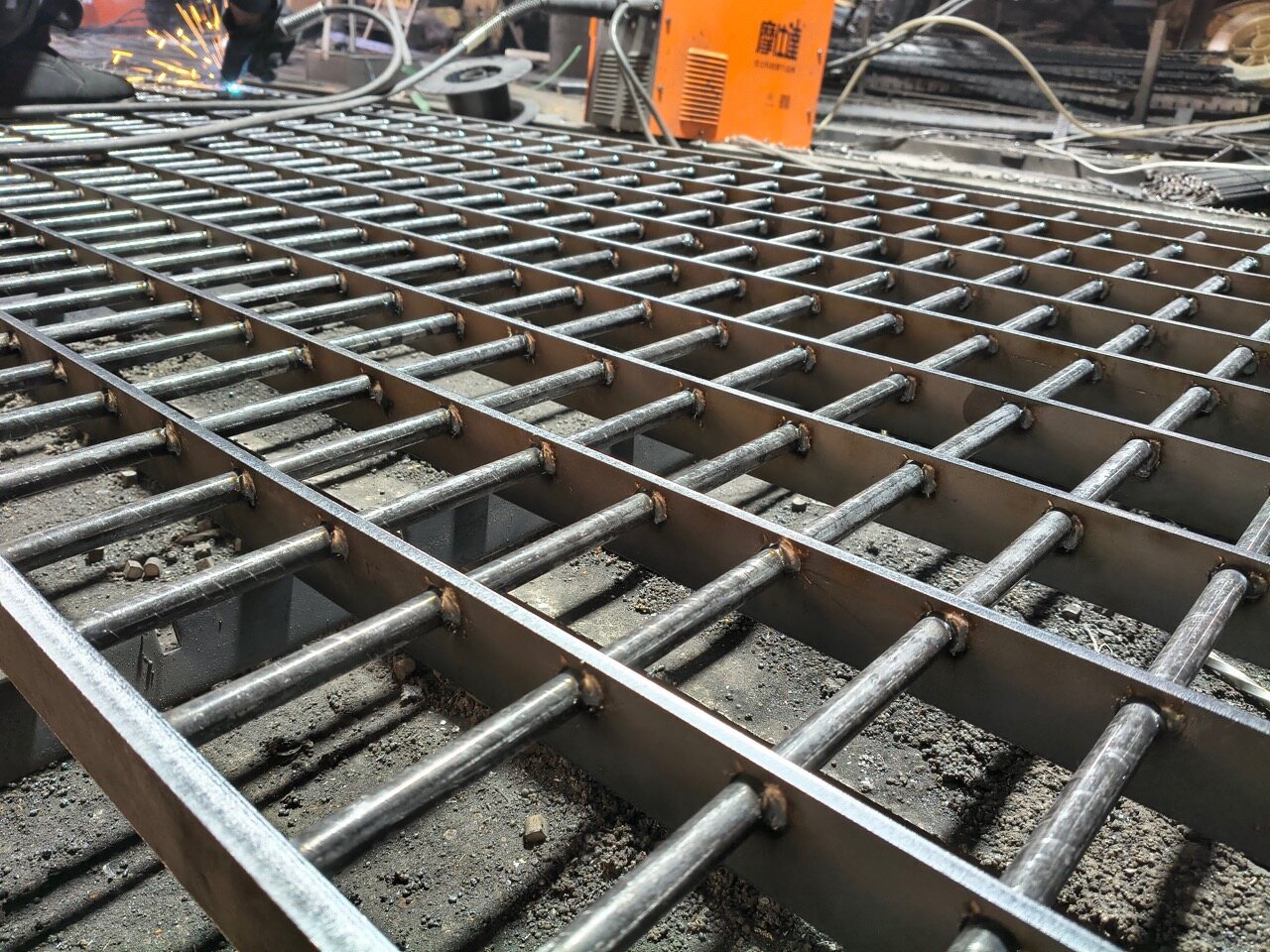
Snap-lock / Plug-in:Slot in flat bar: Crossbars are pressed into the slot under high mechanical pressure, secured by physical interlock without welding. The surface is exceptionally smooth and aesthetically pleasing, commonly used for architectural decoration, light-duty platforms, and inspection covers requiring frequent removal.
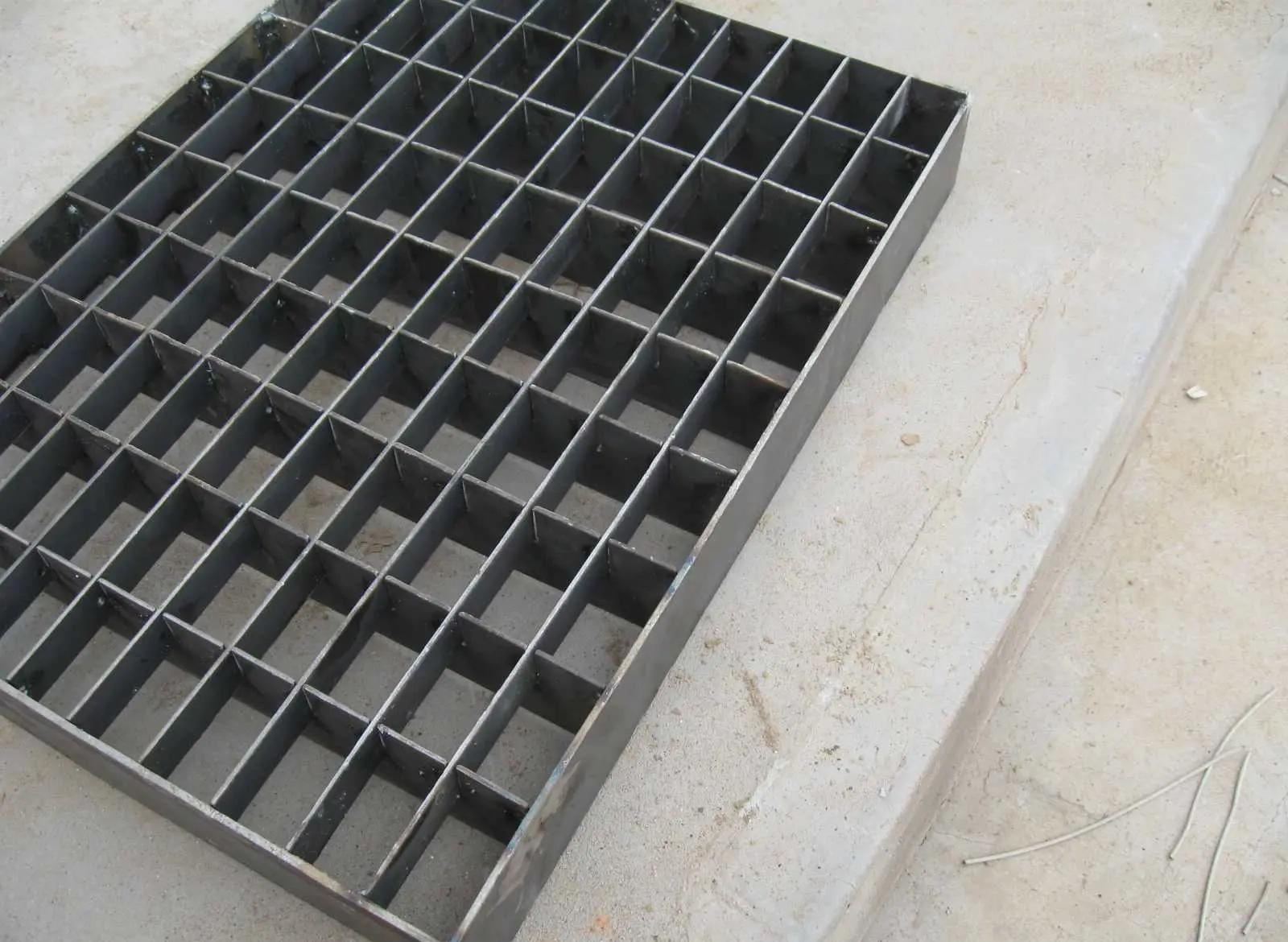
Inlaid / Welded-inGroove the flat bar and embed the cross bar (flat steel) into it. Weld the cross bar to the flat bar securely, then press flat. The groove width is slightly larger than the cross bar thickness so that, after embedding, the top surface of the cross bar sits slightly above the flat bar. After welding and pressing flat, a smooth surface is achieved. This process ensures a flat appearance while maintaining joint strength through welding, and unlike the press-lock type, it reduces requirements for equipment pressure and raw material precision.
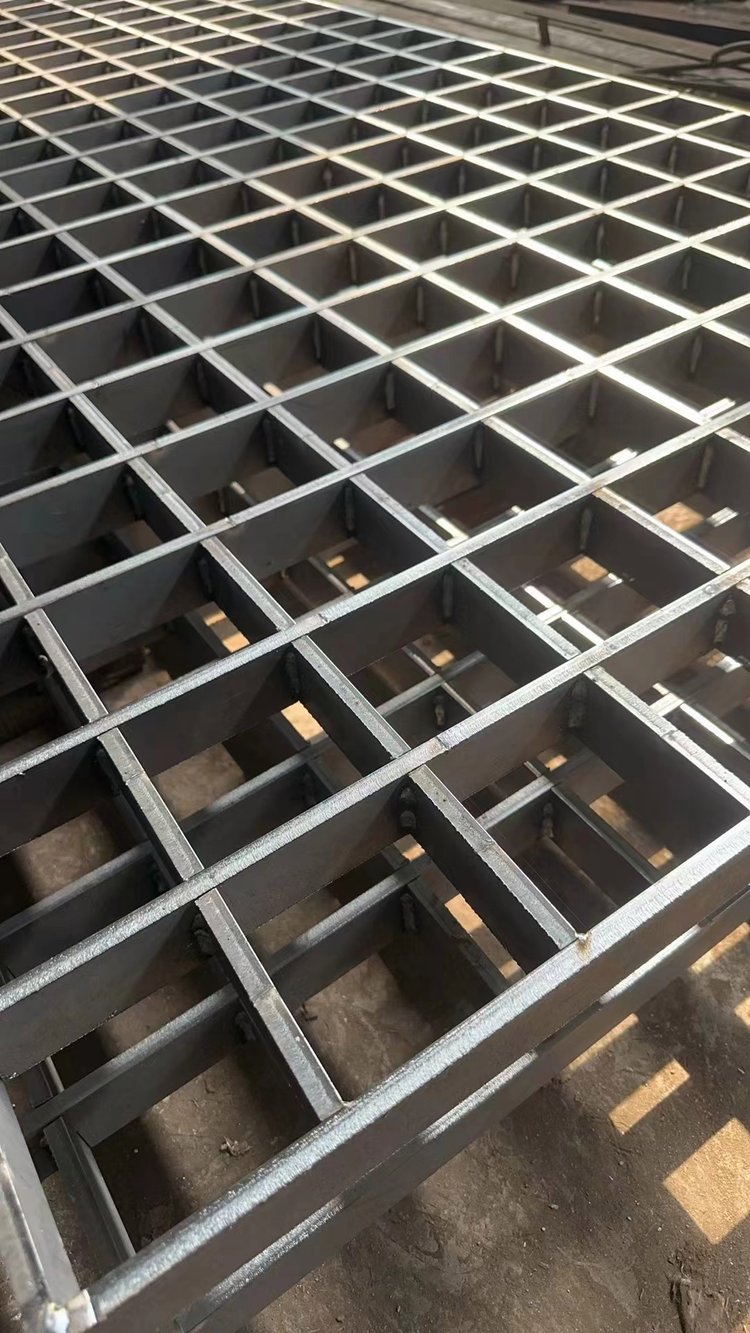
Steel grating requires different welding specifications depending on the connection method.
The grid steel bar scanning welding robot is designed for the gas-shielded welding stage of grid steel bars. Using 3D vision scanning, it automatically identifies weld seams and generates welding paths without teaching. It supports automated welding needs across multiple scenarios, including through-welding at cross points, inlay-based repair welding, and edge-finishing processing after pressure welding, helping enterprises improve quality consistency and production efficiency.